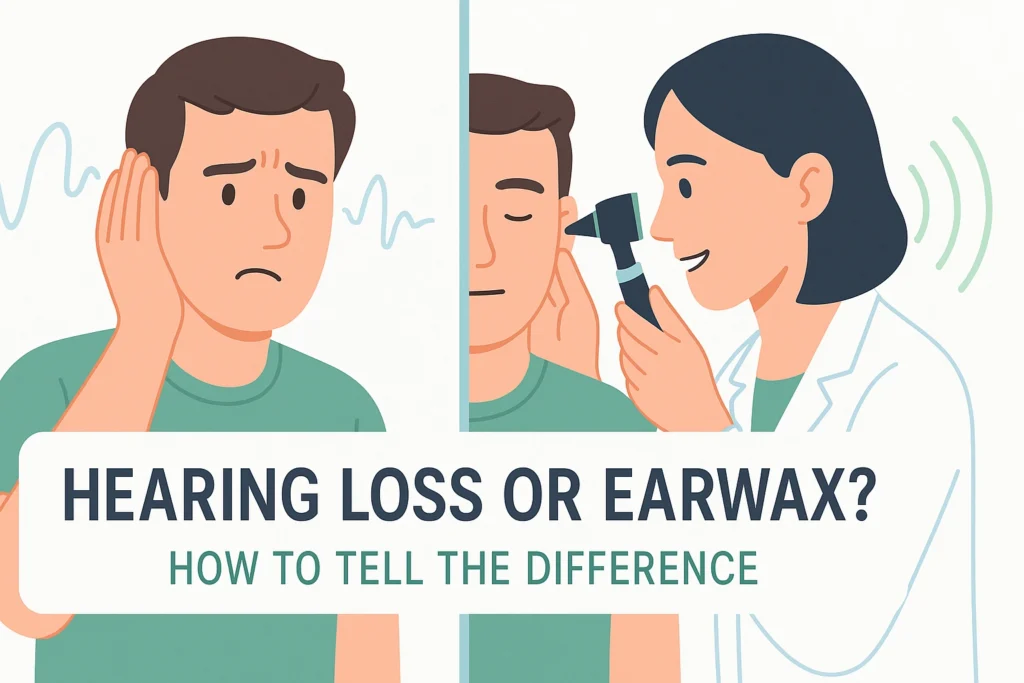
You’re watching TV, chatting with friends, or talking on the phone — and suddenly everything sounds muffled. It’s easy to panic and wonder: “Am I losing my hearing?” But in many cases, it’s simply earwax buildup blocking sound from reaching your eardrum.
At Better Ears, we help patients every day who mistake earwax-related blockage for hearing loss. The good news? It’s often a quick, painless fix. Here’s how to tell whether your hearing issue is caused by earwax or true hearing loss — and when to seek professional help.
Understanding How Hearing Works
The Role of Sound Waves and the Ear Canal
Sound waves travel through your ear canal and vibrate the eardrum, which sends signals to your brain. When wax blocks this pathway, sound becomes muffled or unclear.
Why Blockages Affect Sound Clarity
Even a thin layer of wax can reduce sound transmission — imagine trying to listen through a closed door. If both ears are affected, it can feel like you’re “underwater.”
The Connection Between Earwax and Hearing Loss
How Earwax Naturally Protects the Ear
Earwax (cerumen) traps dust, bacteria, and debris, keeping the ear canal clean and infection-free. It usually works its way out naturally.
When Earwax Buildup Becomes a Problem
If too much earwax accumulates, it can harden and block sound, leading to temporary hearing loss, pressure, or ringing.
Signs Your Hearing Loss Is Caused by Earwax
Muffled or Distorted Sound
Sounds seem distant, and you may need to increase the TV volume or ask people to repeat themselves.
Sudden Loss of Hearing in One Ear
Earwax blockages often affect only one ear, and the hearing loss can happen suddenly.
A Feeling of Fullness or Pressure
You might feel like your ear is “plugged” or has water trapped inside.
Temporary Relief After Ear Cleaning
If your hearing improves after ear drops or cleaning, it’s likely wax-related rather than permanent.
Signs Your Hearing Loss May Be Permanent
Gradual Loss in Both Ears
If your hearing fades slowly over time, it could be age-related hearing loss (presbycusis) or noise damage.
Difficulty Understanding Speech in Noisy Places
If background noise makes conversations hard to follow, it’s likely more than earwax.
Ringing or Buzzing Sounds (Tinnitus)
Chronic ringing that persists even after cleaning can be a sign of inner ear issues.
No Improvement After Earwax Removal
If your hearing remains unchanged after wax removal, a professional hearing test is recommended.
Common Causes of Hearing Loss (Beyond Earwax)
Age-Related Hearing Loss (Presbycusis)
Natural wear of the inner ear affects around one in three adults over 65.
Noise-Induced Damage
Exposure to loud music, concerts, or machinery can permanently damage ear cells.
Ear Infections and Fluid Buildup
Recurrent infections or fluid behind the eardrum can cause hearing fluctuations.
Medication or Health Conditions
Certain medications and conditions like diabetes or hypertension can impact hearing ability.
How to Safely Find Out What’s Causing Your Hearing Loss
Step 1: Book a Professional Ear Check-Up
A quick otoscopic exam can reveal whether wax is blocking your ear canal.
Step 2: Safe Wax Removal if Needed
At Better Ears, we use microsuction or gentle irrigation — fast, safe, and effective.
Step 3: Hearing Test and Professional Diagnosis
If wax isn’t the issue, our audiologists can recommend a hearing assessment for a deeper evaluation.
Why DIY Ear Cleaning Isn’t the Answer
Risks of Cotton Buds and Ear Candles
These push wax deeper, risk burns, and can even perforate your eardrum.
How DIY Methods Make Blockages Worse
Instead of solving the problem, home methods often compact the wax, worsening hearing issues.
Professional Treatments for Earwax-Related Hearing Loss
Microsuction: The Safest and Cleanest Method
Microsuction gently removes wax using a medical suction device and microscope — no water, no risk.
Gentle Irrigation for Soft Earwax
Warm water irrigation can safely clear soft wax under professional supervision.
Routine Ear Health Checks for Prevention
Regular check-ups every 6–12 months prevent buildup and ensure long-term hearing clarity.
Why Choose Better Ears for Hearing and Wax Care
Expert Audiologists with Advanced Tools
All our specialists are HCPC-registered audiologists trained in safe, effective wax removal and hearing care.
Four Convenient Hertfordshire Clinics
You can find Better Ears in:
- Radlett – 347 Watling Street, WD7 7LB
- Harpenden – 1 High Street, AL5 2RS
- Hemel Hempstead – 161 London Road, HP3 9SQ
- Wheathampstead – 2 High Street, AL4 8AA
We also offer home visits for added convenience.
Compassionate, Patient-Focused Ear Care
At Better Ears, we combine modern technology with personalized attention to help you hear your best — safely and comfortably.
FAQs on Earwax and Hearing Loss
Q1. Can earwax cause hearing loss?
Yes, earwax can completely block sound waves from reaching your eardrum, causing temporary hearing loss.
Q2. How can I tell if it’s earwax or hearing loss?
If your hearing improves after cleaning or microsuction, it was likely wax-related.
Q3. How often should I get my ears checked?
Every 6–12 months, especially if you use headphones or hearing aids.
Q4. Is microsuction safe?
Yes, it’s the safest and most effective earwax removal method available.
Q5. What if it’s not earwax?
Better Ears can refer you for a comprehensive hearing test with trusted audiology partners.
Conclusion: Don’t Guess — Get Your Hearing Checked Professionally
If your hearing feels blocked or muffled, don’t assume the worst — but don’t ignore it either. The difference between temporary earwax buildup and permanent hearing loss can only be confirmed by a professional.
At Better Ears, our experts make it easy to find out. With gentle microsuction, safe irrigation, and friendly audiologists, we’ll help you hear clearly again — quickly and safely.
Book your ear health check today at your nearest Better Ears clinic and rediscover the sound of clarity.