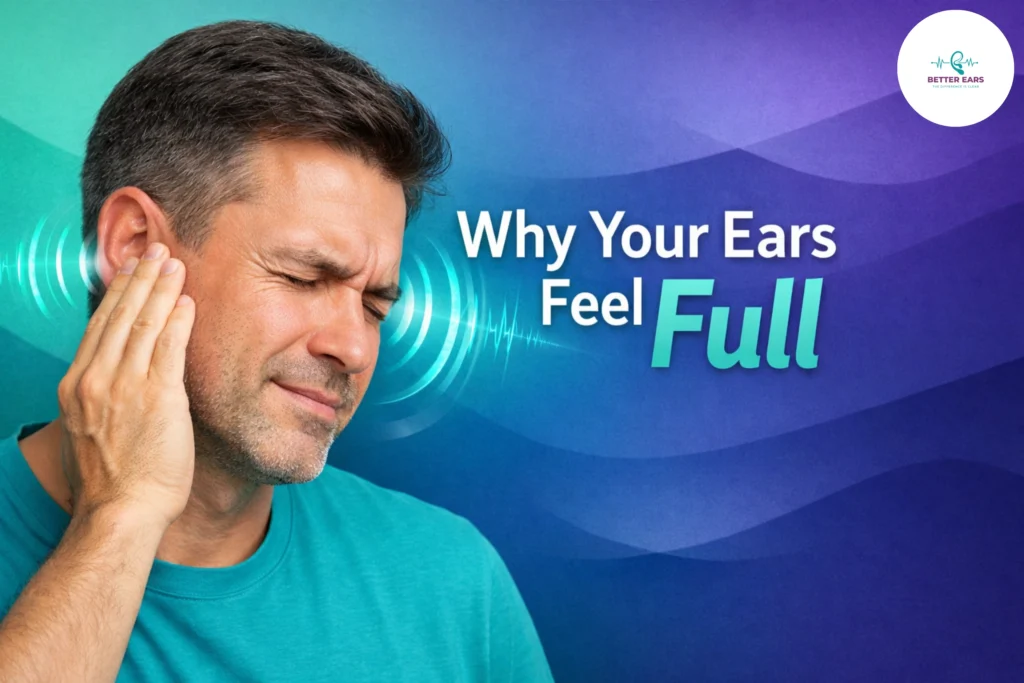
Ear fullness is often described as a heavy, clogged, or pressurised sensation — almost as if your ears need to “pop” but won’t. Unlike a completely blocked ear, fullness can come and go, fluctuate during the day, or worsen with swallowing, flying, or colds.
At Better Ears, many patients tell us:
“My ears don’t hurt, but they constantly feel full.”
This sensation can be caused by pressure problems, wax, fluid, sinus congestion, or early hearing changes. Understanding the difference is essential to finding safe, lasting relief.
What Does “Ear Fullness” Actually Mean?
Fullness vs blockage
A blocked ear usually means something physical — often wax — is stopping sound from travelling normally.
Ear fullness, however, is often related to pressure imbalance, fluid, or inflammation rather than a solid obstruction.
How pressure affects hearing
Your ears rely on balanced air pressure to hear clearly. When pressure inside the middle ear doesn’t match outside air pressure, the eardrum can’t move freely — creating a sensation of fullness, dullness, or muffled sound.
Common Causes of Ear Fullness
1. Earwax buildup
Even partial wax buildup can cause:
- A heavy sensation
- Reduced sound clarity
- Crackling or popping
Warm environments or moisture can worsen the feeling.
2. Eustachian tube dysfunction
The Eustachian tube helps equalise pressure. If it becomes inflamed or blocked due to:
- colds
- allergies
- sinus congestion
…pressure builds up, leading to fullness or popping.
3. Fluid behind the eardrum
Fluid trapped in the middle ear prevents normal eardrum movement and often causes:
- Fullness
- Dull hearing
- Clicking sounds
This is common after infections or during allergy flare-ups.
4. Sinus congestion and allergies
Inflamed sinuses affect the ears because the nose, throat, and ears are closely connected. Congestion often creates pressure rather than pain.
5. Pressure changes and altitude
Flying, diving, or even weather changes can trigger ear fullness when pressure equalisation is delayed.
6. Early hearing changes
Some people experience ear fullness as an early sign of hearing changes, particularly when background noise becomes harder to filter.

Symptoms That Often Come With Ear Fullness
Muffled or dull hearing
Sounds may feel distant or unclear.
Popping or crackling
Common during swallowing or yawning.
Ringing or mild dizziness
Pressure changes can irritate the inner ear.
When Ear Fullness Is a Warning Sign
Sudden onset
Sudden fullness without a clear cause may require urgent assessment.
Pain, discharge, or vertigo
These symptoms suggest infection or inner ear involvement.
Safe Home Relief Options (Short-Term)
Swallowing and yawning
Helps open the Eustachian tube naturally.
Steam and hydration
Steam inhalation and adequate fluids reduce congestion.
Avoid risky remedies
Never use cotton buds, ear candles, or home suction devices.
What Not to Do When Your Ears Feel Full
❌ Do not insert objects into the ear
❌ Do not force ear popping
❌ Do not ignore symptoms lasting over a few days
Professional Diagnosis and Treatment
Ear examination
We examine the ear canal and eardrum to identify wax, infection, or pressure problems.
Microsuction
Safe, gentle removal of wax often provides immediate relief.
Pressure and sinus support
We guide treatment or referral when sinus or pressure issues are involved.
How Better Ears Can Help
Expert clinicians
Our specialists use modern diagnostic tools to identify the exact cause of ear fullness.
Convenient clinic locations
📍 Radlett – 347 Watling Street
📍 Harpenden – 1 High Street
📍 Hemel Hempstead – 161 London Road
📍 Wheathampstead – 2 High Street
🏡 Home visits available
FAQs
Q1. Why do my ears feel full but not blocked?
Often due to pressure imbalance rather than wax.
Q2. Can anxiety cause ear fullness?
Stress can worsen awareness of pressure sensations.
Q3. How long should ear fullness last?
A few hours to a few days. Persistent symptoms need checking.
Q4. Will wax removal help?
Yes, if wax is contributing to the sensation.
Q5. Should I worry if fullness is sudden?
Yes — sudden changes should be assessed promptly.
Conclusion
Ear fullness is common but shouldn’t be ignored — especially when it lingers or affects your hearing. Whether caused by pressure, wax, fluid, or congestion, identifying the cause is the safest way to find relief.
At Better Ears, we provide expert assessments and gentle treatment to help you feel comfortable again.
Book your ear health appointment today.