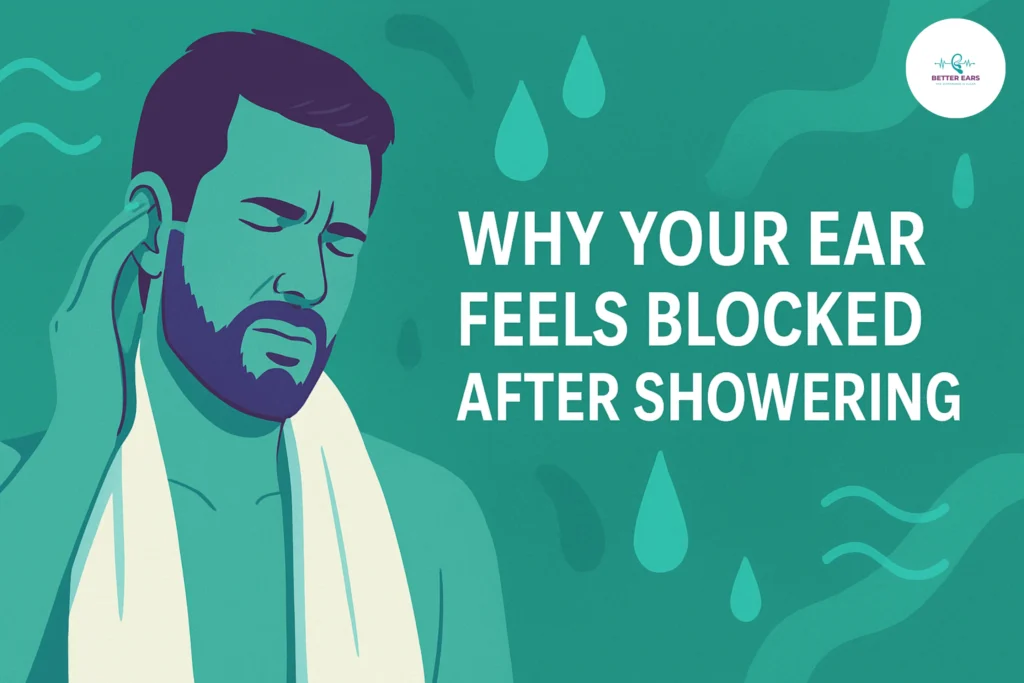
A blocked ear after showering is a surprisingly common experience. One minute you’re drying off, and the next your ear feels muffled, heavy, or full — as though water is trapped deep inside. For some, the sensation disappears quickly; for others, it lingers and becomes uncomfortable or even painful.
At Better Ears, many patients visit us thinking their ear is full of water when the cause is actually wax, moisture, inflammation, or pressure changes. Understanding why it happens is the best way to prevent it and know when to seek help.
Why Your Ear Blocks After Showering
Water trapped behind earwax
If you have earwax close to the entrance of the canal, even a small splash of water can slip behind it and become trapped.
Moisture-related swelling of earwax
Warm water softens wax. Softened wax expands and blocks more of the canal, causing instant muffling.
Narrow or curved ear canal anatomy
Some ear canals naturally curve or narrow, making it harder for water to drain on its own.
Pressure changes from temperature shifts
Hot showers create warm steam that can temporarily swell the skin inside the canal, creating a blocked sensation.
Common Causes of a Blocked Ear After Showering
1. Earwax expansion
Earwax absorbs moisture during a shower. When it expands, it blocks the canal and dampens sound.
This is one of the most common reasons your ear feels blocked afterward.
2. Moisture trapped behind wax or skin folds
Even tiny droplets can get stuck behind:
- wax
- dry skin
- natural canal curves
This small amount of moisture can create loud crackling or popping when you chew or move your jaw.
3. Early ear infections triggered by moisture
Water can irritate the ear canal, especially if the skin is already inflamed. This sometimes leads to:
- itching
- tenderness
- fullness
- mild discharge
4. Fungal irritation (otomycosis)
Warm, moist environments — like after a shower — can encourage fungal growth in the ear.
Typical signs include:
- persistent wet feeling
- itchiness
- flaky debris
- odour
5. Eczema or dermatitis inside the ear
Hot water and shampoo can aggravate ear eczema, causing swelling and a blocked sensation.
6. Water entering a perforated eardrum (rare but serious)
If your eardrum has a hole, water entering the middle ear can cause:
- sharp pain
- dizziness
- discharge
- reduced hearing
This requires medical assessment.
Symptoms That Suggest It’s More Than Just Water
Persistent fullness or pressure
If the blocked feeling lasts more than a few hours, the cause may be wax or inflammation.
Sharp or deep pain
Pain suggests irritation, infection, or water behind wax pressing on the canal.
Muffled hearing that doesn’t improve
This often indicates a physical blockage rather than simple moisture.
Discharge or unpleasant smell
A sign of infection — bacterial or fungal.
When a Blocked Ear After Showering Is a Warning Sign
Pain lasting beyond 24–48 hours
Could indicate infection or severe inflammation.
Hearing loss with dizziness
May involve pressure imbalance or fluid behind the eardrum.
Recurrent blockage after every shower
Often caused by wax buildup or ear eczema.
Safe Home Relief Options
1. Gravity & gentle head tilting
Tilt your head toward the blocked side and gently tug the outer ear upward to straighten the canal.
2. Warm compress
Holding a warm cloth over the ear can ease pressure and help moisture escape.
3. Controlled steam inhalation
Helps unblock the Eustachian tube if pressure is involved.
4. What to avoid
Do not use:
- cotton buds
- ear candles
- hairdryers directly into the ear
- home “water syringing” tools
These cause injuries and infections.
Professional Treatment Options at Better Ears
1. Otoscopy
We check the ear canal and eardrum for:
- wax
- infection
- moisture
- inflammation
2. Microsuction
The safest way to remove:
- water behind wax
- impacted wax
- fungal debris
- infection-related buildup
Instant relief for most cases.
3. Treatment for infection or irritation
We identify bacterial or fungal causes and guide appropriate treatment.
4. Long-term prevention advice
Tailored to your ear anatomy and skin condition.
Prevention: How to Avoid Ear Blockage After Showering
Proper ear-care habits
- Avoid inserting anything into the ear
- Keep ears gently dry externally
- Treat eczema if present
Showering tips
- Let water run off instead of into the ear canal
- Avoid very hot showers if you are prone to swelling
- Dry the outer ear only
When to use ear protection
For people with chronic moisture issues, soft reusable earplugs can help.
Better Ears Clinic Locations
📍 Radlett – 347 Watling Street, WD7 7LB
📍 Harpenden – 1 High Street, AL5 2RS
📍 Hemel Hempstead – 161 London Road, HP3 9SQ
📍 Wheathampstead – 2 High Street, AL4 8AA
🏡 Home visits available
FAQs
Q1. How long should a blocked ear last after showering?
A few minutes to a few hours. Longer than that suggests wax or inflammation.
Q2. Why does my ear crackle after showering?
Water behind wax often causes crackling when you move your jaw.
Q3. Will it go away on its own?
Sometimes — but persistent symptoms may require microsuction.
Q4. Can shower water cause infection?
Yes, especially if moisture gets trapped or the skin becomes irritated.
Q5. Should I use olive oil?
Not recommended. It can worsen fungal irritation.
Conclusion
A blocked ear after showering is often harmless, but it can also signal wax expansion, moisture trapping, irritation, or infection. Understanding the cause helps you find safe relief — and prevent it from happening again.
At Better Ears, we provide gentle, professional care to clear blockages and restore comfort quickly.