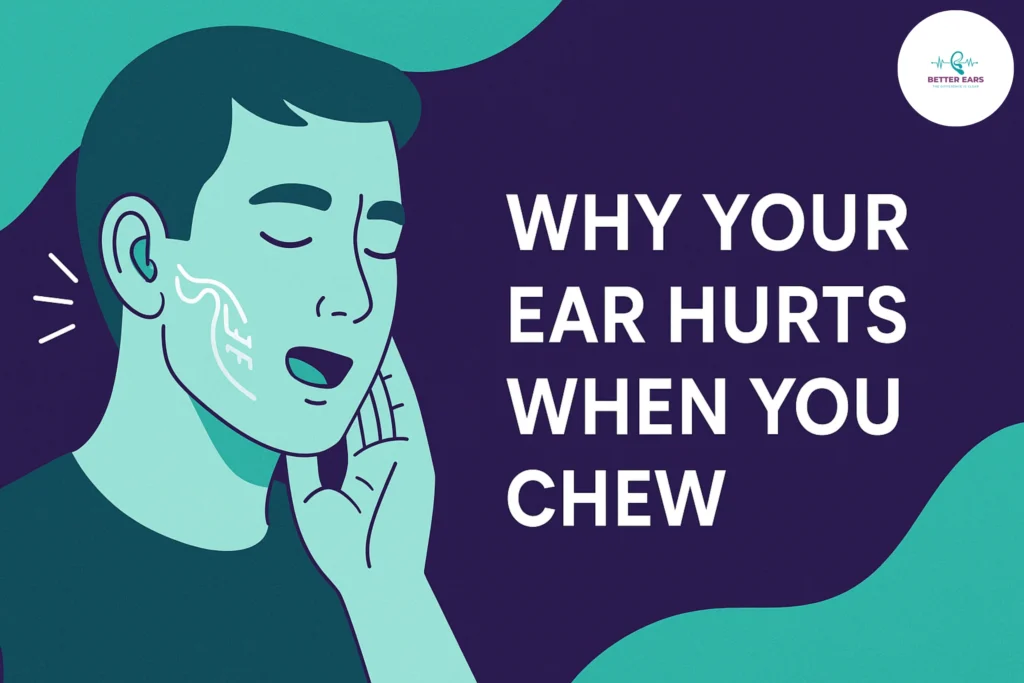
If your ear hurts when you chew, yawn, talk, or open your mouth wide, you’re not alone. This type of pain is surprisingly common — and it often confuses people because the source isn’t always the ear itself. Many patients at Better Ears come in thinking they have an infection, only to learn the pain is actually coming from their jaw, sinuses, or pressure issues.
Pain during chewing can be linked to the temporomandibular joint (TMJ), ear pressure changes, infections, wax buildup, or even dental issues. Understanding the connection helps you find the right treatment — and avoid making symptoms worse.
Understanding the Ear–Jaw Connection
The proximity of the TMJ to the ear
The TMJ sits directly beside the ear canal, separated only by a thin layer of bone. When this joint becomes strained or inflamed, the discomfort radiates into the ears.
Shared nerves and referred pain
The ear and jaw share nerve pathways. That means jaw problems can feel like ear problems — even when the ear itself is completely healthy.
Common Causes of Pain While Chewing
1. Temporomandibular joint (TMJ) dysfunction
TMJ issues are the most common reason it hurts during chewing.
Common TMJ symptoms include:
- Pain when chewing or talking
- Jaw clicking or popping
- Jaw stiffness
- Pain in front of the ear
- Headaches or face pain
TMJ pain increases when the jaw moves — making chewing uncomfortable.
2. Infections and inflammation
If the ear canal or middle ear is inflamed, chewing makes symptoms worse because:
- Moving the jaw stretches nearby tissues
- Pressure inside it increases
Infections often cause:
- Pain
- Warmth
- Itching
- Fluid
- Fullness or muffled hearing
3. Earwax pressure or blockage
When wax presses against the eardrum or ear canal, jaw movement can trigger discomfort.
Other symptoms of wax-related pain include:
- Crackling when chewing
- Temporary hearing reduction
- A blocked sensation
- Sudden sharp discomfort
Microsuction usually resolves this instantly.
4. Eustachian tube dysfunction (ETD)
The Eustachian tube equalises pressure in the middle ear. When it becomes blocked from:
- colds
- allergies
- sinus infections
- pressure changes
…chewing can intensify the sense of pressure or pain.
5. Jaw clenching or grinding (bruxism)
Night-time clenching strains the jaw joint and muscles near the ear.
Symptoms include:
- Morning pain
- Soreness around the jaw
- Headaches
- Stiffness when chewing
6. Dental issues radiating to the ear
Tooth infections, cavities, or gum inflammation can send pain into the ear due to shared nerve pathways.
If the pain worsens while chewing hard foods, a dental source may be the cause.

Symptoms That Suggest the Cause Is More Than Jaw Movement
Clicking, popping, or locking jaw
A clear sign of TMJ involvement.
Swelling, heat, or discharge
These symptoms point to infection — especially if it’s tender to touch.
Hearing changes or pressure
Wax, fluid, or Eustachian tube blockage may be affecting your hearing.
When Ear Pain While Chewing Is a Warning Sign
Persistent pain over 48 hours
This may indicate infection, inflammation, or TMJ dysfunction.
Pain with fever or dizziness
Could be related to middle ear infection or sinus issues.
Sharp pain with sudden hearing loss
This requires immediate assessment.
Safe Home Relief Options (Short-Term)
1. Warm compresses
A warm cloth over the jaw and ear helps relax strained muscles and reduce inflammation.
2. Gentle jaw stretches
Slow movements may ease tension in TMJ-related pain.
3. Soft diet
Eating softer foods reduces pressure on the jaw and ear structures.
4. Steam inhalation
Helps reduce sinus pressure that may affect the ears.
What Not to Do When Your it Hurts While Chewing
1. Avoid chewing on one side only
It strains the TMJ and makes symptoms worse.
2. Avoid cotton buds
They push wax deeper and cause injury.
3. Avoid forceful jaw stretching
This can worsen inflammation.
Professional Diagnosis and Treatment Options
1. Otoscopic examination
We check for wax, infection, inflammation, or pressure issues.
2. Microsuction for wax removal
Safe, gentle, and effective — perfect for pain linked to wax.
3. TMJ evaluation and referrals
If TMJ dysfunction is the cause, we guide you toward appropriate care.
4. Treatment for infections or pressure problems
This may include medical treatment or supportive care.
How Better Ears Helps You Feel Comfortable Again
Expert clinicians
Our specialists identify the exact cause of your pain using advanced diagnostic tools.
Four Hertfordshire locations
📍 Radlett
📍 Harpenden
📍 Hemel Hempstead
📍 Wheathampstead
🏡 Home visits also available
We provide safe, effective solutions tailored to your symptoms.
Conclusion
Pain while chewing is often caused by TMJ strain, sinus pressure, infections, or earwax buildup. Understanding the underlying cause helps you choose the safest, most effective treatment.
At Better Ears, we offer gentle, expert care to diagnose the problem and help you feel comfortable again.
Book your assessment today.