
Do you ever hear a ringing, buzzing, or hissing sound that no one else can? You’re not imagining it — this condition is called tinnitus, and it affects millions of people worldwide.
While it isn’t a disease itself, it’s often a sign that something’s wrong inside your ear — from earwax buildup to noise damage or even stress. The good news? With professional ear care, most of the cases can be managed effectively and even reduced.
At Better Ears, we help patients understand and treat it every day through safe ear cleaning, hearing assessments, and expert advice.
What Is Tinnitus?
Defining it in Simple Terms
It’s the perception of sound in the absence of an external source. You might hear ringing, buzzing, hissing, or even clicking — but no one around you can.
How Common Is it?
According to the NHS, It affects around 1 in 8 adults in the UK. It can be temporary or long-term, mild or severe, and can impact one or both ears.
What Does Tinnitus Sound Like?
The Different Types of Tinnitus Noises
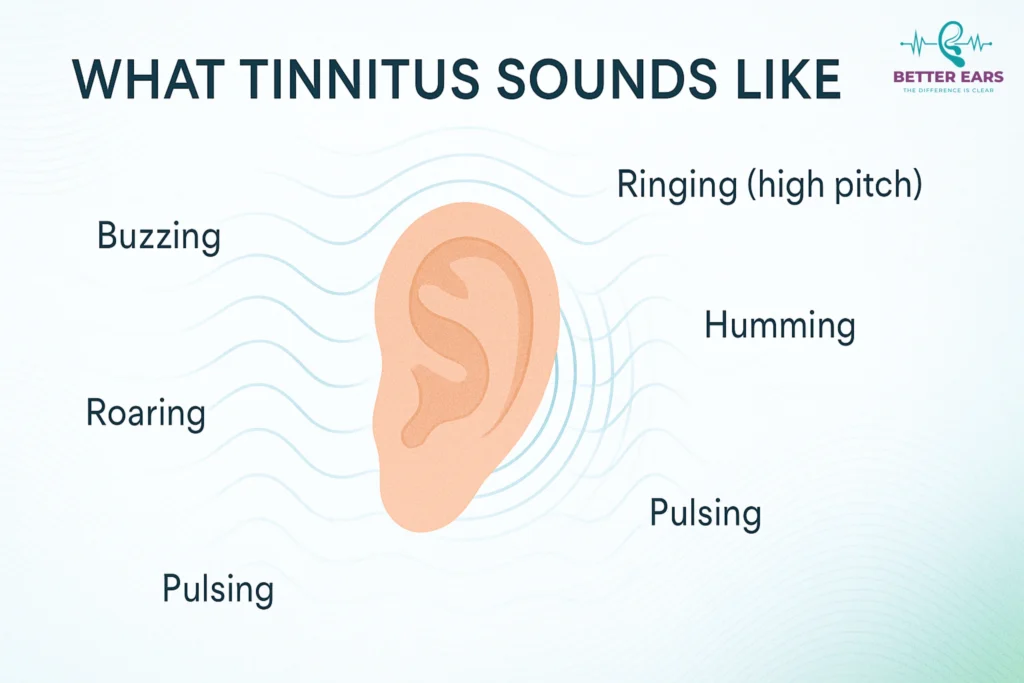
People describe it in many ways:
- Ringing (high-pitched or low)
- Humming or buzzing
- Roaring or whooshing sounds
- Pulsing or rhythmic beats
How Tinnitus Affects Daily Life
For some, It’s a minor annoyance. For others, it interferes with sleep, focus, and mental well-being. Left untreated, it can increase stress and anxiety, worsening the perception of noise.
The Main Causes of Tinnitus
Earwax Buildup and Blockages
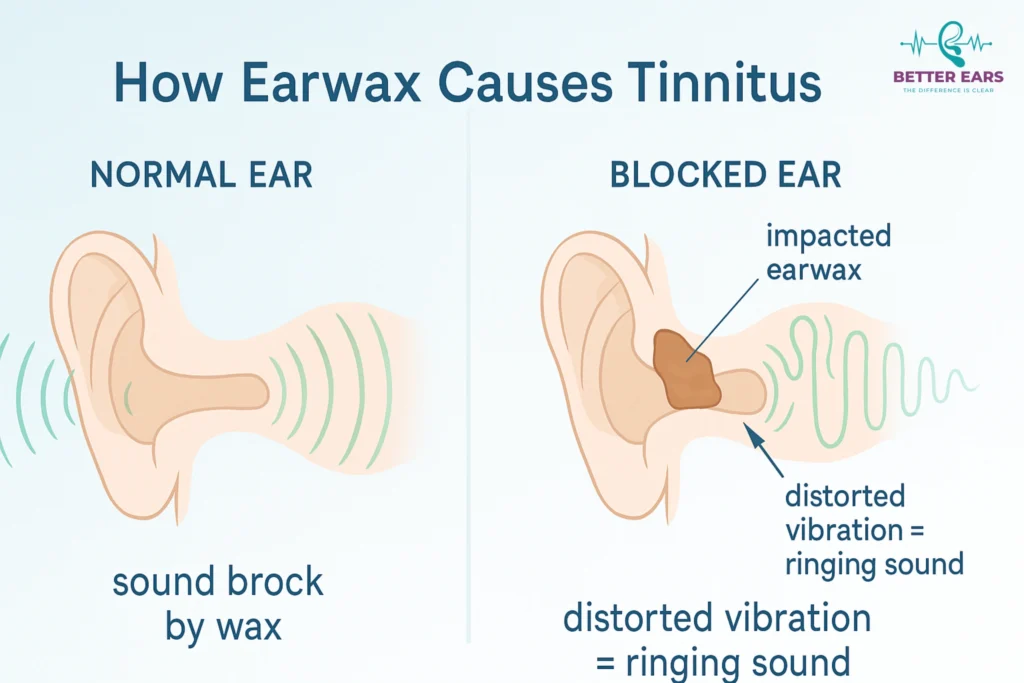
One of the most common — and fixable — causes of tinnitus is impacted earwax. When wax presses against the eardrum, it changes sound perception and can trigger ringing or fullness.
Exposure to Loud Noise
Frequent exposure to concerts, machinery, or loud headphones can damage tiny inner ear cells, leading to noise-induced tinnitus.
Ear Infections or Fluid Buildup
Inflammation or trapped fluid in the middle ear can distort sound, causing a temporary ringing sensation.
Age-Related Hearing Loss
As hearing declines with age, your brain compensates for missing frequencies by generating phantom sounds — one explanation for tinnitus in older adults.
Stress and Certain Medications
High stress and some medications (like antibiotics or painkillers) can worsen the symptoms.
When to Worry: Signs You Should See a Professional
Persistent Ringing or Buzzing Sounds
If it lasts more than a few days or keeps returning, book an ear health check.
Tinnitus with Dizziness or Hearing Loss
When ringing occurs with hearing loss or balance problems, it may indicate a deeper ear condition that needs professional care.
One-Sided Tinnitus (In One Ear Only)
If it affects only one ear, always get it checked — it can sometimes point to underlying nerve or pressure issues.
How Tinnitus Is Diagnosed by Professionals
Ear Examination and Hearing Tests
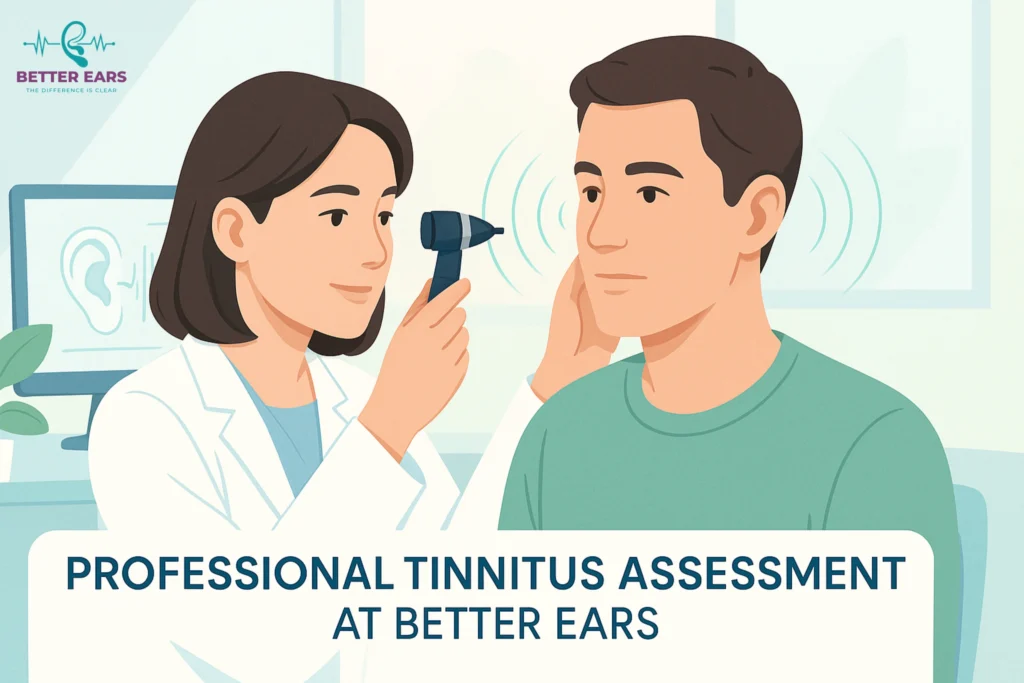
Audiologists begin by examining your ear canal for wax, fluid, or damage using an otoscope. Then, a hearing test (audiogram) helps identify hearing patterns linked to it.
Identifying Underlying Causes
In many cases, It’s linked to wax impaction, hearing loss, or middle ear infection — all treatable causes.
Rule Out Serious Ear or Nerve Issues
If necessary, you may be referred for imaging or specialist ENT testing to ensure nothing more serious is causing the noise.
The Connection Between Earwax and Tinnitus
How Impacted Wax Triggers Tinnitus
When earwax builds up, it can press against the eardrum, change sound vibrations, and trick the brain into perceiving phantom noises.
Restoring Quiet Through Professional Microsuction
At Better Ears, we use microsuction, a gentle and precise suction method to remove wax safely. Many patients experience immediate tinnitus relief once the blockage is cleared.
Professional Treatments and Support for Tinnitus
Earwax Removal and Ear Health Checks
For wax-related tinnitus, professional microsuction or irrigation can make an instant difference.
Sound Therapy and Masking Techniques
Soft background sounds or white noise can reduce how noticeable tinnitus feels — especially during quiet moments.
Hearing Aids with Tinnitus Management Features
Modern hearing aids amplify missing frequencies while using tinnitus masking technology to reduce the perception of noise.
Relaxation and Stress Reduction Techniques
Stress can heighten tinnitus perception. Techniques like deep breathing, yoga, and mindfulness help calm the nervous system and reduce symptoms.
What You Can Do at Home to Manage Tinnitus
Protect Your Ears from Loud Sounds
Avoid long-term exposure to loud environments and use ear protection at concerts or in noisy workplaces.
Limit Caffeine and Alcohol Intake
Both can increase blood flow to the ear and worsen for some individuals.
Practice Mindfulness and Relaxation
Calming routines like meditation, soft music, or breathing exercises can help you cope better with tinnitus.
Why You Should Avoid DIY Treatments for Tinnitus
The Risks of Ear Candles and Self-Cleaning Tools
Ear candling is dangerous and ineffective — it doesn’t remove wax and can cause burns or perforations.
Why Professional Assessment Is Essential
It can have many causes, so professional evaluation is crucial. Self-diagnosis may overlook serious but treatable ear conditions.
How Better Ears Helps Patients with Tinnitus
Expert Diagnosis and Safe Treatments
Our HCPC-registered audiologists specialize in the assessment and safe earwax removal using microsuction and irrigation.
State-of-the-Art Hearing and Wax Removal Equipment
We use advanced otoscopic cameras and suction devices to ensure a comfortable, clean, and precise experience.
Four Convenient Hertfordshire Clinics and Home Visits
Find us at:
- Radlett – 347 Watling Street, WD7 7LB
- Harpenden – 1 High Street, AL5 2RS
- Hemel Hempstead – 161 London Road, HP3 9SQ
- Wheathampstead – 2 High Street, AL4 8AA
Or request a home visit for comfort and accessibility.
FAQs About Tinnitus and Ear Care
Q1. Can earwax cause tinnitus?
Yes — impacted wax is one of the most common and reversible causes of it.
Q2. Can tinnitus be cured?
While it can’t always be cured, it can be managed effectively through sound therapy, hearing aids, and stress control.
Q3. Does ear cleaning stop tinnitus?
If wax is the cause, professional ear cleaning can bring immediate relief.
Q4. When should I see a doctor for tinnitus?
If ringing persists for more than a week, or is only in one ear, seek professional help.
Conclusion: Take Control of Tinnitus with Better Ears
It can be frustrating — but it doesn’t have to take over your life. With the right care, most people find relief and regain peace of mind.
At Better Ears, our experienced audiologists help uncover the cause of the disease and provide personalized treatments to restore your ear health and quiet.
Don’t wait in silence — book your ear health assessment today at Better Ears and experience the sound of calm again.
Book Your Appointment Now